
Gadget that makes use of gentle and sound might gradual Alzheimer’s signs in some sufferers

The Boston Globe

An experimental gadget that makes use of gentle and sound to stimulate the mind appeared to gradual cognitive decline in folks at early levels of Alzheimer’s illness, in line with combined outcomes from a medical trial introduced Nov. 16 at a scientific convention in Boston.
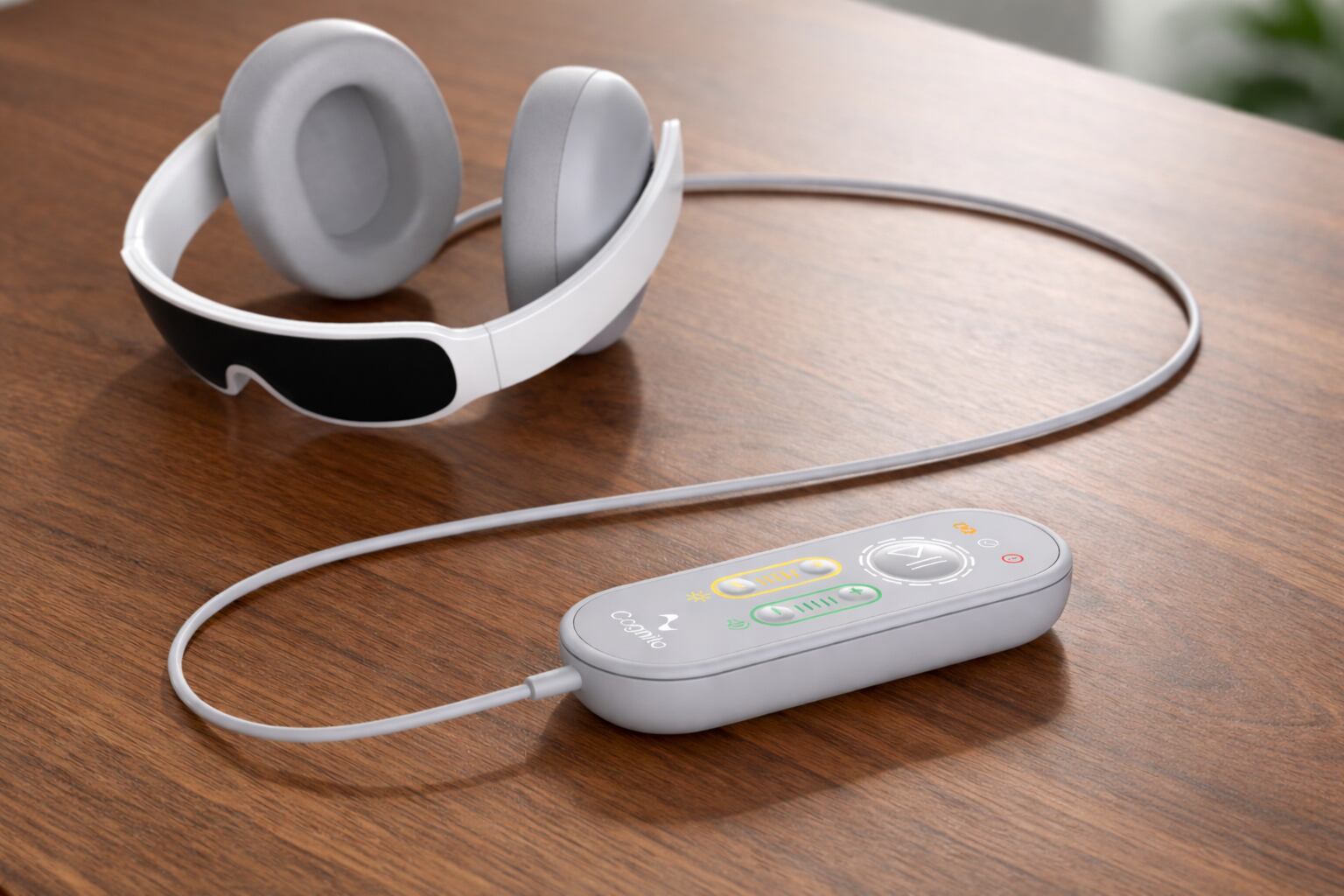
Cognito Therapeutics, the Cambridge-based biotech firm behind the gadget — which can be utilized at homeand appears to be like like a pair of sun shades connected to headphones — mentioned the findings may maintain promise for thousands and thousands of individuals with the incurable sickness.
The outcomes, which haven’t but been peer-reviewed, will probably be submitted to the New England Journal of Drugs, the corporate mentioned.
“The potential implications are large,” mentioned Christian Howell, Cognito’s CEO. “Many individuals have the flexibility to deliver this into their lives and actually positively affect what they’re experiencing.”
However the trial, the biggest of this gadget up to now, was designed to measure efficacy in folks with gentle to reasonable Alzheimer’s and didn’t present a remedy impact within the general group ofpeople who used the expertise. The info did counsel that folks with gentle Alzheimer’s who used Cognito’s gadget may expertise slower cognitive decline, particularly in the event that they used it nearly on daily basis for almost an hour, as really helpful.
“There’s a touch that there could also be one thing there, nevertheless it’s unproven and must be verified,” mentioned Heather Snyder, senior vice chairman of medical and scientific relations on the Alzheimer’s Affiliation.
The invention, which known as Spectris, makes use of gamma wave remedy and is predicated on analysis by MIT scientists.
Gamma waves are electrical indicators that mind cells make when individuals are studying or concentrating. Though neuroscientists have identified that these indicators are slower or lacking in folks with Alzheimer’s, it wasn’t till 2016 when researchers led by MIT neuroscientists Li-Huei Tsai and Ed Boyden first found that the brainwaves had the potential to be a remedy.
The MIT researchers realized they may set off gamma waves in mice utilizing easy gentle and sound stimulation. They noticed that the brainwaves may clear mouse brains of sticky clumps of proteins referred to as amyloid plaques, identified to build up within the brains of Alzheimer’s sufferers. Tsai and Boyden went on to cofound Cognito and stay as scientific advisors to the corporate.
The expertise, Howell famous, doesn’t clear amyloid plaques or tau, one other mind protein related to Alzheimer’s, in folks. However researchers discovered that when folks’s brains are stimulated at 40 hertz, it may assist protect mind construction and performance, Howell mentioned.
“It’s not that the amyloid plaques or the tau tangles are literally driving the lack of cognition and performance,” Howell mentioned. “What they’re inflicting is community dysfunction. The neurons are now not in a position to hearth in synchrony. The mind is now not in a position to keep wholesome exercise ranges.”
Snyder likened what occurs within the brains of individuals with Alzheimer’s to a basketball crew that’s not in sync.
“In the event that they’re in sync and so they’re synchronized, you have got these stunning performs,” she mentioned. “If that group is out of sync, then they don’t get the ball down the courtroom, they don’t rating the basket.”
“The thought behind this gadget is: Are you able to get that crew again in sync?” she continued.
Analysis has additionally proven that stimulating the mind at that frequency can scale back neural irritation and assist restore the perform of nerve cells, Tsai mentioned.
“Basically, it has a really broad neuroprotective impact,” she mentioned.
Outcomes from the trial, which included greater than 600 members who have been adopted for a yr, confirmed that the brand new gadget appeared to work in folks with gentle cognitive impairment however not for these with reasonable instances.About half of the research’s members have been randomly assigned to make use of the gadget, whereas the others obtained a placebo, often called a sham gadget. Individuals have been instructed to make use of the gadget for no less than 50 minutes a day, no less than 5 days every week.
In folks with early symptomatic Alzheimer’s, the gadget slowed decline by 56 % primarily based on one frequent measure of functioning. Towards one other measurement, it slowed decline by 47 %.
“It’s unbelievable,” mentioned Tsai, who was circuitously concerned within the trial. “With the gentle inhabitants of Alzheimer’s illness, the remedy confirmed such a big impact.”
Dr. Stephanie Buss, a cognitive neurologist at Beth Israel Deaconess Medical Middle and the middle director of the Reminiscence A2Z Clinic within the Cognitive Neurology Unit, mentioned the gadget is “actually thrilling” to think about. However, she mentioned, the outcomes go away some unanswered questions.
“I’d prefer to study extra concerning the subgroup that did reply,” mentioned Buss, who was not concerned within the trial. “It’s believable it really works for some, however not for all.”
She added that if the gadget have been authorized by the Meals and Drug Administration, it could possibly be “an amazing addition” to present Alzheimer’s remedy, however not a substitute.
Two authorized Alzheimer’s medication available on the market, Leqembi and Kisunla, work by focusing on amyloid plaques andhave been proven to have modest results on slowing cognitive decline. They’ve unintended effects, together with non permanent mind swelling.
Cognito Therapeutics plans to petition the FDA for approval subsequent yr and will obtain authorization by the top of 2027, Howell mentioned.
Globe correspondent Madyline Swearing contributed to this report. Materials from earlier Globe tales was used on this report.
Clarification: An earlier model of this story misstated the group of Alzheimer’s sufferers whose decline slowed by no less than 47 % after utilizing the Spectris gadget. That group was these with early symptomatic Alzheimer’s.