Jensen Huang controversy places Southeast Asia’s AI chip commerce beneath scrutiny
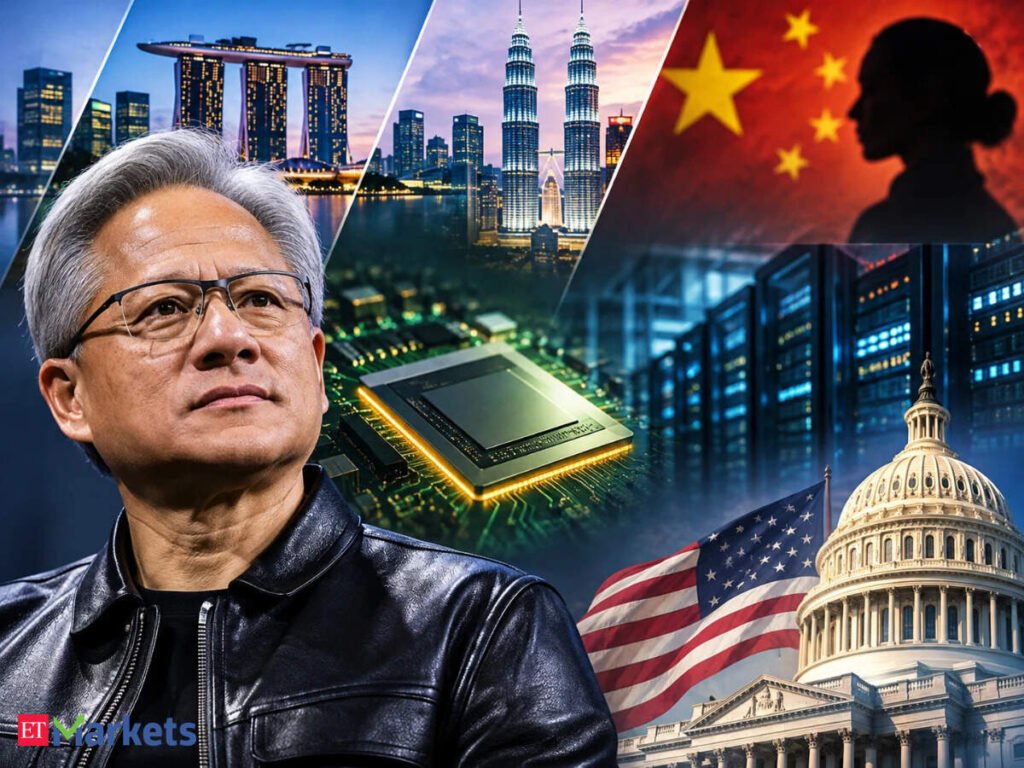
The controversy has prompted US lawmakers from each events to push for stronger restrictions on China’s entry to superior synthetic intelligence chips and intensified scrutiny of Nvidia’s function in US nationwide safety.
Washington already restricts exports of Nvidia’s most superior AI chips to China to guard US management within the sector. Lawmakers at the moment are in search of to shut a loophole that permits Chinese language corporations to lease computing energy from abroad knowledge centres and remotely entry methods geared up with restricted chips.
Any more durable rules might embrace new export controls and licensing necessities for shipments to Malaysia, Thailand, Indonesia and Singapore, the Wall Avenue Journal reported.
Additionally Learn | Anthropic IPO share orders from China are stated to be rebuffed

Alice Huang, the businesswoman suspected of spying for China, beforehand labored as an government at Singapore-based cloud-computing firm Megaspeed. The corporate has subsidiaries in Thailand, Indonesia, Malaysia, Australia and the US.
Singapore authorities have been investigating Megaspeed since February final yr over attainable false declarations associated to server purchases and different alleged offences.“After this case, each operator within the chain might be anticipated to know its finish person. Southeast Asian operators will nonetheless get Nvidia chips, however proof of the place each chip sits and who it serves is now a part of the product,” Ke Yan, head of analysis at Singapore-based funding analysis agency Shenton Analysis, informed Reuters.
A ‘post-DeepSeek second’
Southeast Asia’s data-centre trade has grown quickly as international know-how corporations develop their AI infrastructure.
Malaysia has authorised 385.7 billion ringgit ($94.67 billion) of data-centre-related funding since 2021, in line with the nation’s commerce ministry. Thailand had 42 knowledge centres representing 3,400 megawatts of IT capability and about 750 billion baht ($22.58 billion) of funding as of February, whereas Indonesia’s market was valued at $2.81 billion in 2025.
Gary Goh, CEO of Malaysia-based data-centre consultancy Dash DC, described the prospect of tighter US guidelines as a “post-DeepSeek second.”
“As soon as the brand new guidelines are out, there might be much more restrictions for international locations like Malaysia. There might be a short- to medium-term market shock to the Malaysian knowledge centre market,” Goh stated.
For stay updates on US Markets, click on right here
The AI increase has supported financial progress throughout the area. Singapore raised its annual progress forecast in August to between 4.5% and 5.5%, from 2% to 4%, citing the AI cycle. In Malaysia, a rise in data-centre initiatives helped the development sector develop 6% within the third quarter of 2026.
The commerce ministries of Singapore and Malaysia didn’t instantly reply to requests for remark.
Malaysia stated Thursday that it was contemplating laws that might enable the federal government to watch data-centre operations, together with using high-performance chips. Authorities stated they wanted to make sure that chips topic to US restrictions have been imported for home use reasonably than re-exported.
An investor and CEO of an Asian neocloud firm, who requested to not be recognized, stated he spent Friday morning consulting legal professionals within the US.
“Everybody remains to be determining… Possibly each time you export one thing, there might be extra course of to undergo. We’re anxious about extra scrutiny which is able to make it longer for chips to return by way of,” the CEO stated.
Singapore stated in February 2025 that entities working within the nation accounted for 22% of Nvidia’s chip gross sales, though only one% of the chips bodily entered Singapore. Authorities have additionally charged a fifth individual in a case involving alleged AI-server fraud.
Area anticipated to face up to tighter guidelines
Some analysts stated tighter controls have been unlikely to derail the data-centre growth in Singapore and Malaysia.
“Singapore itself might be extra stringent; I believe it’s a pure factor to occur. Singapore will tighten guidelines, and the US will tighten guidelines, however I don’t assume this may hurt Singapore’s and Malaysia’s prospects of shopping for chips,” Jarick Seet, head of small- and mid-cap equities at Maybank, informed Reuters.
A senior government at a Singapore chipmaker, who declined to be recognized, stated Huang’s departure might make it tougher for Chinese language corporations to acquire US chips whereas probably bettering availability elsewhere.
“With Jensen out, the Chinese language can have a more durable time getting chips from the US. Possibly it’s not a foul factor for the non-US individuals who can have extra entry to chips.”
The chief stated corporations might additionally redirect funding to Southeast Asia if Democratic electoral victories in data-centre-heavy US states corresponding to Texas and Georgia gradual the event of latest amenities.
“These corporations are going to look elsewhere and sure come to international locations that may provide them land and offers and energy,” the manager stated. “Even when we lose a piece of the China enterprise, I believe we are going to get different corporations coming searching for compute.”
(Disclaimer: This text is predicated on inputs from companies. These don’t symbolize the views of The Financial Instances)