
BT BIG STORY: India has did not construct an ecosystem of battery cells. Can a brand new PLI change this?
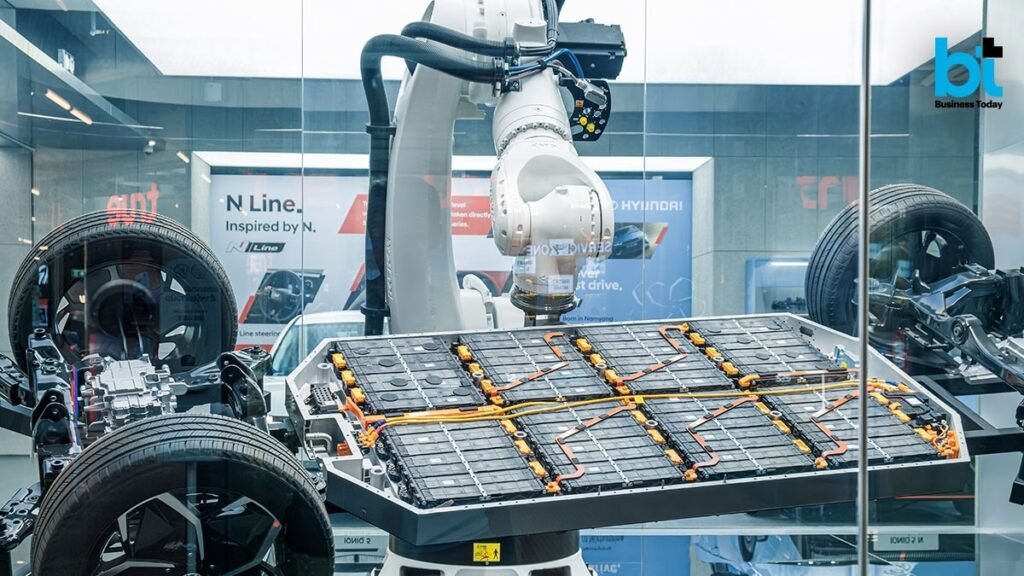
India’s cell imports surged 94% year-on-year to Rs 15,721 crore within the first quarter of 2026-27, based on commerce ministry information.
In July 2026, battery-cell imports soared 159% to Rs 7,209 crore, in contrast with Rs 2,772 crore within the corresponding month final 12 months. Throughout FY26, lithium-ion cell imports stood at Rs 41,667 crore, up 64% year-on-year. China accounted for roughly 85% of the overall.
The sharp improve in battery-cell imports comes as the federal government promotes electrification throughout vehicle segments via incentives comparable to PM E-Drive, PM-eBus Sewa and the production-linked incentive (PLI) scheme for vehicles and auto parts.
Regardless of the huge demand for electrical mobility, home provide of lithium-ion cells stays negligible, as most Indian corporations, barring Ola Electrical, lack the technical know-how to provide them.
To make India self-reliant in battery cells, the federal government rolled out an Rs 18,100-crore PLI scheme for Superior Chemistry Cells (ACC) in Might 2021. Though beneficiaries had been awarded 40 GWh (gigawatt-hours) of battery-cell capability, manufacturing has barely begun.
Aside from Bhavish Aggarwal-led Ola Cell Applied sciences, no PLI beneficiary has arrange cell-manufacturing capability. Even Ola Cell Applied sciences has begun industrial operations with solely 2.5 GWh of capability, regardless of securing 20 GWh underneath the ACC PLI scheme. No cell maker has obtained an incentive but.
MUST READ: India’s EV market is rising sooner than America’s. Right here’s why
With little progress in cell manufacturing, the federal government is now planning a brand new Rs 12,000-crore PLI scheme for battery-cell parts comparable to cathode and anode energetic supplies, electrolytes and copper-foil separators. The purpose is to develop a home raw-material manufacturing ecosystem.
The ACC PLI scheme has not labored to date as a result of incentives for cell parts had been wanted first, Anurag Choudhary, Chairman, Managing Director and CEO of Himadri Speciality Chemical Ltd, advised Enterprise As we speak.
“Except you will have the raw-material parts, you’ll nonetheless be an assembler, importing uncooked supplies and merely making cells,” Choudhary mentioned.
In accordance with the Himadri CMD, the federal government has a vital function to play. “That is going to be a giant business,” he mentioned, including that one of the best method is to construct the whole worth chain inside the nation.
Himadri plans to arrange a 2,000-tonne plant in Kolkata to provide cathode energetic supplies, a key uncooked materials for LFP cells. The corporate expects the plant to turn into operational by December 2026. “We’re additionally engaged on a 40,000-metric-tonne plant, which might be operational in FY28,” Choudhary mentioned.
Himadri has already began a 200-tonne anode plant in West Bengal, the place it produces anode materials from coke and coal tar. “Cathode and anode collectively account for 65% of a cell’s price. We’re going to be current in each merchandise,” Choudhary mentioned.
Himadri has outlined an funding of Rs 4,200 crore in cathode energetic supplies, which comprise 25% lithium carbonate. Since lithium shouldn’t be mined in India, the corporate plans to import it from nations comparable to Argentina, Bolivia and Chile.
Electrolyte is the one part that cell producers purchase domestically; every thing else comes from China as a result of no Indian firm produces uncooked supplies at scale, based on Vikram Handa, founder and managing director of Epsilon Superior Supplies.
Greater than 90% of cathode and anode energetic supplies are processed in China, Handa added.
The federal government has been pursuing a number of measures, however the business continues to battle, Handa mentioned. “I feel the intention of the ACC PLI was that demand is certainly coming, so let’s promote this section and get began. Previously three to 4 years, the problem has been that it is a high-technology house that’s evolving extraordinarily quick,” he defined.
A scarcity of funding in expertise is another excuse for India’s restricted battery-cell manufacturing, Handa mentioned. “The largest problem is danger capital. As we speak, somebody placing in Rs 2,000 crore desires to earn returns within the subsequent quarter. On this business, that’s troublesome. Are corporations prepared to speculate 8-10% in R&D? Not many are. The federal government can solely nudge us and supply coverage enablers,” he mentioned.
ALSO READ: Suzuki goes electrical: This tiny EV guarantees 310 km on one cost
To fabricate cells domestically, India should view the battery worth chain as an entire reasonably than incentivise every half in isolation, Handa believes. “If we wish to localise cell manufacturing, we additionally must localise the supplies and parts that go into the cell. In any other case, we are going to proceed to rely upon imports for a big a part of the worth chain, which may additionally turn into a national-security situation sooner or later,” he mentioned.
Epsilon at present produces graphite anode materials at its 2,000-tonne plant in India, which may help 2 GWh of cell capability. It goals to scale capability to 30,000 tonnes by 2028.
Epsilon’s anode-material challenge has secured approval underneath MeitY’s ECMS scheme, with Rs 145 crore in capex help masking 25% of the capital funding.
The worth of localisation
Battery cells produced in India are anticipated to price roughly 20% greater than Chinese language imports, based on Himadri’s Choudhary.
“China’s technique is to promote under price in order that nobody else on the planet produces these merchandise. It sells under price in order that others don’t discover manufacturing commercially viable,” he defined.
To make India self-reliant in battery cells, Choudhary mentioned each operational and capital incentives are wanted. “It’s not that we want lifelong help, however we do want it within the preliminary years,” he mentioned.
“There’s a want for presidency help for cell parts. China sells cells at extremely aggressive costs, so there are hardly any margins. To make the enterprise viable, the Indian authorities should introduce a part scheme,” Choudhary mentioned.
An govt at an Indian cell firm advised Epsilon’s Handa that even when it sourced every thing from China on the lowest accessible worth and acquired nothing domestically, its cell would nonetheless be 25% costlier than a Chinese language cell.
Lead-acid battery maker Amara Raja Power & Mobility — which is growing technical know-how in-house after its proposed partnership with China’s Gotion hit a wall — is steadily warming to domestically made cell parts for its not too long ago commissioned Buyer Qualification Plant (CQP) on the Giga Hall in Telangana. With an preliminary capability of 60 MWh, the plant will manufacture lithium-ion cells that prospects can check and validate earlier than industrial manufacturing begins.
“We primarily use imported supplies at present. However Indian supplies have gotten accessible, and we now have began producing batches of cells through which chosen native supplies are substituted. That is occurring steadily. We introduce one materials change in every batch in order that we will higher observe any variability in efficiency,” Vikramadithya Gourineni, govt director of Amara Raja Power & Mobility, advised BT.
Though the ACC PLI scheme was well-intentioned, the projected battery-cell capability has not materialised, Gourineni mentioned. “I take a look at different authorities insurance policies that might show efficient. The Indian Semiconductor Mission has a a lot bigger outlay, and its method is essentially totally different. A high-powered inter-ministerial committee examines entry to expertise, the product’s place within the ecosystem, operational feasibility and strategic buyer partnerships to make sure offtake. As soon as these features have been assessed, funds are disbursed via a milestone-based method,” he mentioned.
Gourineni drew a parallel with the India Semiconductor Mission, for which the federal government has authorised a a lot bigger fiscal outlay of Rs 2.03 lakh crore throughout two phases.
“The federal government can be taking a way more entrepreneurial method, underwriting a major share of the project-execution danger,” he defined.
Amara Raja plans to speculate Rs 9,500 crore to construct 16 GWh of cell capability in phases by 2030-31.
The expertise barrier
Regardless of the current thaw in India-China ties, a number of Indian corporations, together with Reliance Industries and JSW Group, are struggling to amass the technical know-how wanted for cell manufacturing. On the not too long ago concluded BRICS Summit in New Delhi, Prime Minister Narendra Modi mentioned the weaponisation of expertise and demanding minerals may hinder the bloc’s shared progress.
Reliance Industries Ltd (RIL), via its subsidiaries Reliance New Power Battery Ltd and Reliance New Power Battery Storage Ltd, was awarded 15 GWh of capability underneath the ACC PLI scheme. The conglomerate has but to put in any capability.
Anant Ambani, Govt Director of Reliance Industries, mentioned on the firm’s forty ninth Annual Normal Assembly that entry to battery expertise was being “weaponised”. “In a world the place provide chains are being contested and entry to expertise is being weaponised, constructing world-scale battery-manufacturing capability in India shouldn’t be merely a enterprise choice. It’s a strategic crucial for nationwide resilience,” Ambani mentioned.
He added that Reliance New Power deliberate to fee the primary part of its 40-gigawatt-hour (GWh) battery-cell gigafactory this 12 months, as all of the gear required to provide cells had been delivered.
Earlier in August, JSW Group scion Parth Jindal mentioned China was guarding LFP cell-manufacturing expertise “like a weapon”, prompting the steel-to-automobiles group to place its plans to fabricate battery cells in India on maintain. “We’re very eager to make cells in India. LFP (lithium iron phosphate) expertise is at present not accessible to us. The hunt is on for a expertise tie-up. We have now not secured one, so the challenge is at present on maintain,” Jindal mentioned. “LFP cells come solely from China, and they don’t seem to be sharing the expertise. We’re prepared to speculate and manufacture in India.”
India desires to fabricate batteries at dwelling and cut back its dependence on China, however Indian corporations nonetheless want Chinese language expertise to make that occur. Creating homegrown alternate options, in the meantime, would require important funding and sustained authorities help.